Shopping & Dining

1
Cash, Please…

While credit cards and mobile payments are becoming more common in Japan, cash is still king in many
places.
Small restaurants, local markets, street stalls, or even shrines and temples often accept cash
only. So, it’s a good idea to keep a bit of extra yen on hand.
※Note: There have been recent reports of pickpocketing targeting tourists in the Tokyo area, so please take care of your belongings.
2
Love Shopping?
Try Local Treasures!

Across Japan, each region has its own unique traditional crafts - pottery, textiles, lacquerware, and more. These local souvenirs aren’t just keepsakes; they help preserve regional culture and craftsmanship that has been passed down for generations.
When you buy something locally made, you’re not only taking home a memory - you’re supporting local artisans and communities.

R7-359
Traditional Craft Mark
This is the “Traditional Craft Mark” labeled onthe “Traditional Craft Products” designated by the Minister
of Economy, Trade and Industry.
3
Have You Tried
Washoku?
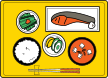
Washoku - traditional Japanese cuisine - is recognized by UNESCO as an Intangible Cultural Heritage. It’s all about seasonal ingredients, beautiful presentation, and a healthy balance of flavors and colors. Of course, dishes like sushi and ramen are must-tries, but don’t miss out on local specialties from different regions - they’re full of hometown charm!
In Japan, finsishing your meal is considered polite, while also being environmentally friendly. As such, please try to order just the right amount - and take only as much food from the hotel buffet as you can eat. Also, please remember that bringing outside food or drinks into restaurants is generally not allowed in Japan. Japanese diners are also sensitive to strong smells during meals. When visiting sushi restaurants or other traditional Japanese eateries, it is best to avoid wearing strong perfume.
A Few Extra Tips
- Making a little slurping sound when eating noodles like soba or ramen is perfectly okay - it’s seen as natural, not rude!
- Soba (japanese backwheat noodles) can cause allergies for some people. If you feel unwell after eating, please visit a hospital right away.
4
Give Chopsticks a Try!

In Japan, chopsticks are the standard way to enjoy traditional meals. But don’t worry - many restaurants can
provide a fork or spoon if you ask, and bringing your own travel cutlery is also a great idea! There are
just a couple of important chopstick “no-nos” to keep in mind:
🚫 Don’t stick your chopsticks upright
into a bowl of rice - it reminds people of funeral rituals.
🚫 Don’t pass food directly from one pair of
chopsticks to another - it’s also associated with funeral customs.
With these tips, you’ll handle chopsticks like a pro - and show a little extra respect for Japanese culture.
5
Eating While Walking?

In Japan, eating while walking is generally seen as impolite. It’s best to eat near the shop where you bought your food - either inside or just in front of it.
When you’re done, return your trash to the shop or take it with you. Public trash bins are quite rare in Japan, so it’s smart to ask for a takeaway bag when you buy food - that way, you can carry any trash until you find the right place to dispose of it.
Please also avoid bringing food into other shops or shopping while eating.
6
Want to Try a Sample?

In Japan, many souvenir shops, markets, and department stores offer free food samples - lucky you! If you try one, it’s nice to say “Oishii desu!” (“It’s delicious!”) afterward - it leaves a good impression. However, if you’re not planning to buy, it’s polite to skip the sample. Also, please avoid taking multiple samples or having everyone in your group taste without buying - that’s considered impolite. If you like what you tried, go ahead and buy a little to support the local shop - it’s a sweet way to give back!
And remember: never open a product before purchasing it - that’s a big no-no in Japan.
7
Alcohol

Japan has a wide variety of drinks - from sake and shochu to craft beers and more! It’s easy to get carried away while traveling and enjoying the atmosphere, but try to pace yourself and drink responsibly. Japanese sake is smooth and easy to drink, but don’t be fooled - it’s about 13–16% alcohol, similar to wine, and stronger than beer. If it’s your first time trying it, start with a small amount and savor the flavor slowly.
